
Diagram showing structured system layers around a probabilistic AI core with validation, guardrails, and observability.

Building Reliable AI Systems: Why Prompting Isn’t Enough

Introduction Most generative AI demos work. Most generative AI systems fail. That gap isn’t about model quality—it’s about system design. Over the past year, I’ve been experimenting with applying large language models to real engineering workflows—generating structured outputs from messy inputs, integrating enterprise data, and building agent-like systems. The biggest lesson so far: prompting is the easy part. Building something reliable around it is the real engineering problem. This mirrors a pattern seen in distributed and mobile systems—reliability emerges from architecture, not individual components. ...
April 28, 2026 · 4 min · Pavan Kumar Appannagari
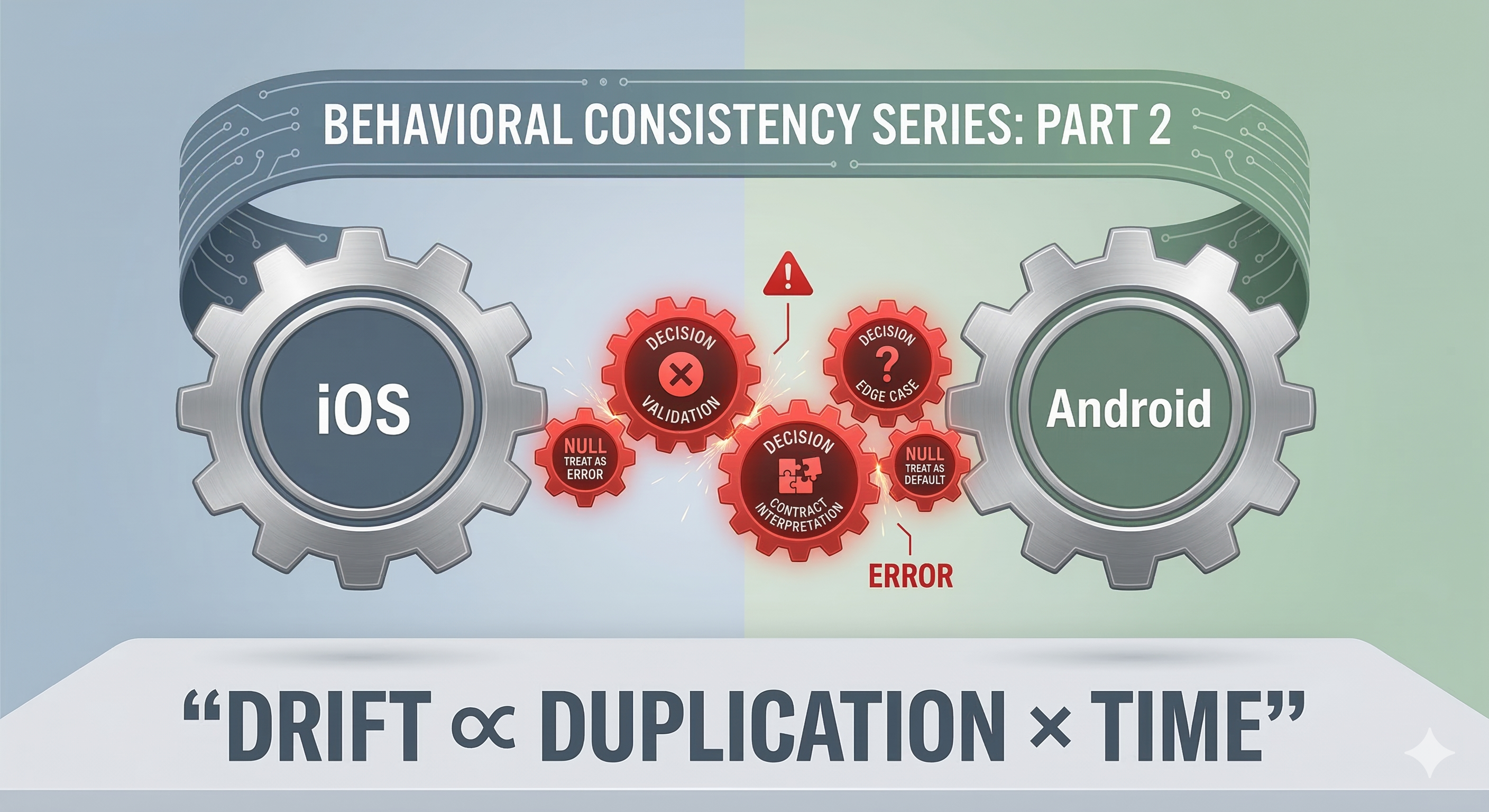
Architectural drift between iOS and Android systems

Why Feature Parity Bugs Are Architectural, Not Testing Failures

This article is part of a series on behavioral consistency in software systems. Previously: The Doppelgänger Dilemma — Why Apps Drift Why Feature Parity Bugs Are Architectural, Not Testing Failures QA reports: “Android works. iOS fails.” The backend logs show success. Payloads look identical. Nothing crashes. Nothing obvious is broken. Yet the system behaves differently across platforms. The instinctive response is procedural: Expand regression coverage Add cross-platform test matrices Increase release coordination Tighten QA cycles These actions feel responsible. They feel disciplined. ...

February 24, 2026 · 4 min · Pavan Kumar Appannagari