
Conceptual illustration showing AI vulnerability discovery moving faster than enterprise remediation pipelines.

When AI Finds Bugs Faster Than Teams Can Patch Them

Introduction The most compelling AI story emerging in 2026 isn’t about chatbots, image generation, or code autocompletion. It comes from the defensive security space. In April 2026, Anthropic launched Project Glasswing, granting technology leaders and critical infrastructure providers early access to Claude Mythos Preview — a specialized security model built for vulnerability discovery and defensive analysis. The findings were stark: out of an estimated 6,202 high- or critical-severity vulnerabilities identified across foundational open-source software, only 97 had been confirmed remediated within two months. Anthropic noted that “even at our relatively slow pace of disclosures, Mythos Preview is adding to an already-overloaded security ecosystem.” ...

September 12, 2026 · 6 min · Pavan Kumar Appannagari
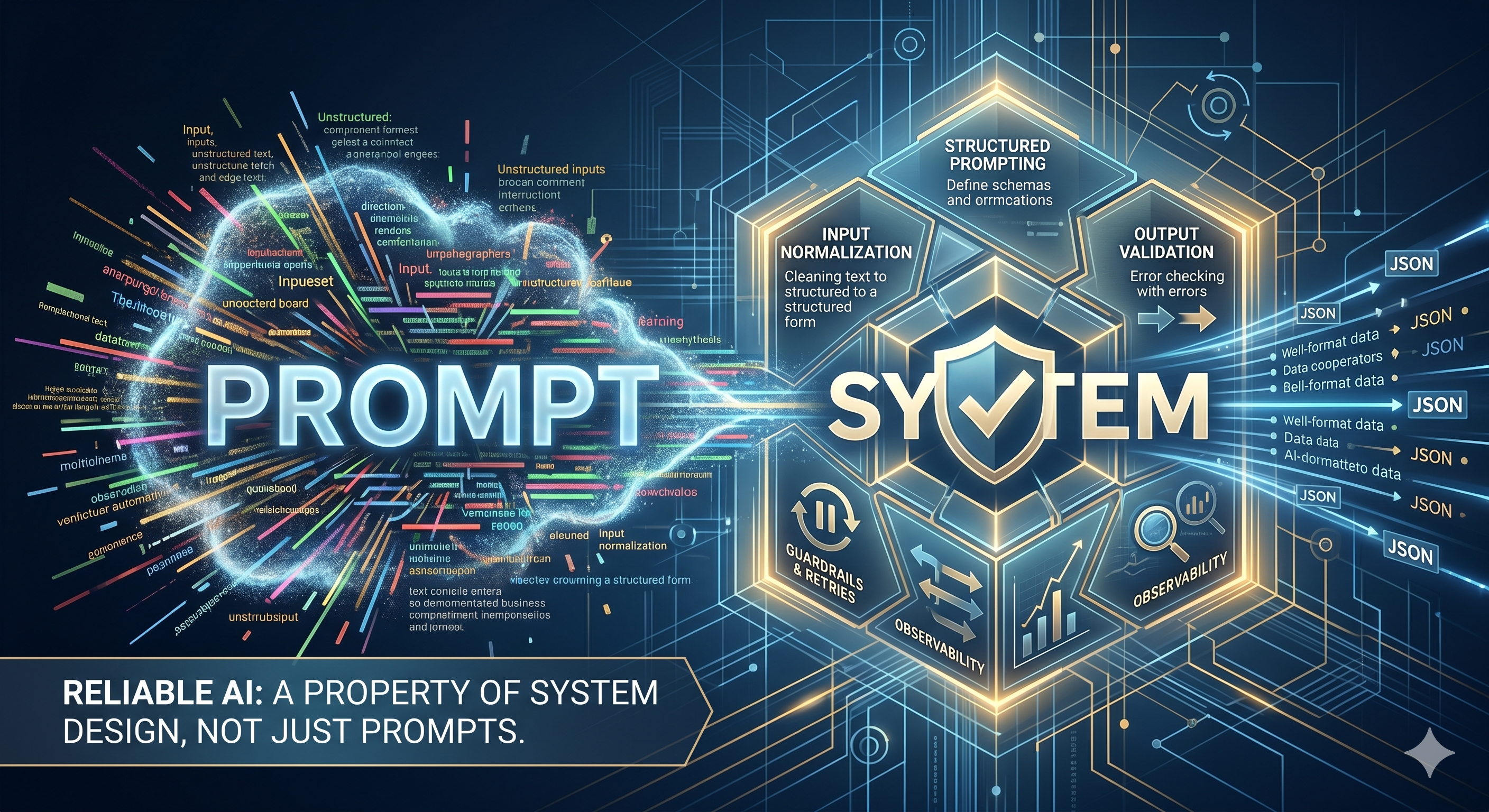
Diagram showing structured system layers around a probabilistic AI core with validation, guardrails, and observability.

Building Reliable AI Systems: Why Prompting Isn’t Enough

Introduction Most generative AI demos work. Most generative AI systems fail. That gap isn’t about model quality—it’s about system design. Over the past year, I’ve been experimenting with applying large language models to real engineering workflows—generating structured outputs from messy inputs, integrating enterprise data, and building agent-like systems. The biggest lesson so far: prompting is the easy part. Building something reliable around it is the real engineering problem. This mirrors a pattern seen in distributed and mobile systems—reliability emerges from architecture, not individual components. ...

April 28, 2026 · 4 min · Pavan Kumar Appannagari
Conceptual visualization comparing research on mathematical optimization with modern AI semantic reasoning for test generation.

From Research Paper to Prototype: Using Generative AI to Automatically Generate Test Cases

Introduction About five years ago, I came across a research paper on Search-Based Software Testing (SBST) published on IEEE. The idea was fascinating: instead of writing test cases manually, software testing could be treated as an optimization problem. Algorithms could explore the space of possible inputs and automatically discover test cases that maximize coverage and expose hidden defects. Conceptually, it felt like a glimpse into the future of testing. But there was a problem. ...

March 15, 2026 · 6 min · Pavan Kumar Appannagari